Sunday, April 28, 2019

Friday, April 26, 2019
INDUSTRY RESEARCH - THE HISTORY
THE HISTORY OF MUSIC VIDEOS
Although the origins of the music video dates to ‘Musical short films’ that appeared in the 1920’s. Their prominence in pop culture came from the 1980’s when the channel MTV based their format around this type of medium. Prior to this, videos were described more as an ‘illustrated song’, ‘film insert’ or ‘song video’. Musical films from the 1930’s-1950’s was another important precursor to music video – this was a major inspiration to create videos specifically for music. These music films even became sources of intertextuality, such as ‘Diamonds are a girl's best friend’, from the film ‘Gentlemen prefer Blondes’, which inspired Madonna's ‘material girl’ music video in 1985.
‘Filmed Inserts’
In 1965, British band ‘The Beatles’, began making ‘filmed inserts’ for distribution and broadcast in other countries to promote their record releases without having to make personal appearances. The first promo films were shot in late 1965 – this consisted of ‘Help!’ and ‘We can work it out’ which blended with normal television shows like ‘top of the pops’. Previously, In 1964, Live concert films were already being released with the T.A.M.I show. Bob Dylan’s 1965 promo video for ‘subterranean homesick blues’ is another key video to influence not only modern takes of intertextuality but acted as the precursor of lyric music videos.
At 12:01am on August 1, 1981, history was made when MTV, the first 24-hour video music channel, launched onto our television sets and literally changed our lives with the birth of the music video. The first video ever played on the network was quite ironic — "Video Killed The Radio Star" by The Buggles
In 1983, the most successful, influential and iconic music video of all time was released: the nearly 14-minute-long video for Michael Jackson's song "Thriller", directed by John Landis. The video set new standards for production, having cost US $800,000 to film.
The video for the 1985 Dire Straits song "Money for Nothing" made pioneering use of computer animation and helped make the song an international hit. The song itself was a wry comment on the music-video phenomenon, sung from the point of view of an appliance deliveryman both drawn to and repelled by the outlandish images and personalities that appeared on MTV. In 1986, Peter Gabriel's song "Sledgehammer" used special effects and animation techniques developed by British studio Aardman Animations. The video for "Sledgehammer" would go on to be a phenomenal success and win MTV awards.
Since 2005, the rise of YouTube has seen music videos as some of the highest viewed videos of all time with Luis Fonsi’s reggaeton hit Despacito being the biggest global megahit. The song went to number one in 47 countries and made the top 10 in a further six. It became the first Spanish-language record to go to number one in the U.S. since Macarena back in 1996.The song also set a record for the fastest song to reach one billion views, taking just 97 days. In comparison, it took Gangnam Style five months to achieve the same landmark.
Although the origins of the music video dates to ‘Musical short films’ that appeared in the 1920’s. Their prominence in pop culture came from the 1980’s when the channel MTV based their format around this type of medium. Prior to this, videos were described more as an ‘illustrated song’, ‘film insert’ or ‘song video’. Musical films from the 1930’s-1950’s was another important precursor to music video – this was a major inspiration to create videos specifically for music. These music films even became sources of intertextuality, such as ‘Diamonds are a girl's best friend’, from the film ‘Gentlemen prefer Blondes’, which inspired Madonna's ‘material girl’ music video in 1985.
‘Filmed Inserts’
In 1965, British band ‘The Beatles’, began making ‘filmed inserts’ for distribution and broadcast in other countries to promote their record releases without having to make personal appearances. The first promo films were shot in late 1965 – this consisted of ‘Help!’ and ‘We can work it out’ which blended with normal television shows like ‘top of the pops’. Previously, In 1964, Live concert films were already being released with the T.A.M.I show. Bob Dylan’s 1965 promo video for ‘subterranean homesick blues’ is another key video to influence not only modern takes of intertextuality but acted as the precursor of lyric music videos.
At 12:01am on August 1, 1981, history was made when MTV, the first 24-hour video music channel, launched onto our television sets and literally changed our lives with the birth of the music video. The first video ever played on the network was quite ironic — "Video Killed The Radio Star" by The Buggles
In 1983, the most successful, influential and iconic music video of all time was released: the nearly 14-minute-long video for Michael Jackson's song "Thriller", directed by John Landis. The video set new standards for production, having cost US $800,000 to film.
The video for the 1985 Dire Straits song "Money for Nothing" made pioneering use of computer animation and helped make the song an international hit. The song itself was a wry comment on the music-video phenomenon, sung from the point of view of an appliance deliveryman both drawn to and repelled by the outlandish images and personalities that appeared on MTV. In 1986, Peter Gabriel's song "Sledgehammer" used special effects and animation techniques developed by British studio Aardman Animations. The video for "Sledgehammer" would go on to be a phenomenal success and win MTV awards.
Since 2005, the rise of YouTube has seen music videos as some of the highest viewed videos of all time with Luis Fonsi’s reggaeton hit Despacito being the biggest global megahit. The song went to number one in 47 countries and made the top 10 in a further six. It became the first Spanish-language record to go to number one in the U.S. since Macarena back in 1996.The song also set a record for the fastest song to reach one billion views, taking just 97 days. In comparison, it took Gangnam Style five months to achieve the same landmark.
INDUSTRY RESEARCH - THEORY
THEORIES TO KEEP IN MIND DURING THE PROCESS OF CREATING MY PIECE
- RECEPTION THEORY: -
Nationwide audience - Different social/economic groups watched the same TV programme, interviews reveal different readings of the same text: -
Dominant (Hegemonic) reading: -Reader shares the encoded meanings of the text.
Negotiated reading: - Reader shares some of the embedded ideologies but not all
Oppositional (Counter-hegemonic) reading: - The reader does not share the programme's code and rejects the preferred reading.
-Members of the same subculture tend to decode text in the same way.
-Often the opposite to effects theories because it sees media consumption as active and not passive.
-The theory suggests that media texts are polysemic.
-Research examines social, cultural, economic, gender and sexuality as influence on the reading of media texts.
- SVEN E CARLSSON
Carlsson believes there are two categories that music videos can fall into – performance and conceptional. Performance videos are where the audience can watch the artist sign and dance eg: Side to side- Ariana Grande. On the other hand, conceptional videos are where the audience watch something other than the artist in the video eg: oceans- seafret. Carlsson created the theory that most performance movies make the performer not a performer anymore and that they are a materialisation of the commercial exhibitionist. This implies artists therefore are always restricted.
- ANDREW GOODWIN
-Andrew Goodwin believes there to be 5 main aspects to a music video that audiences look for: Star image, narrative, relation of visuals to song, technical aspects of the music video and thought beats.
Star Image – How the artist represents themselves through the video
Narrative – The storyline/progression of the piece
Relation of visuals to song - relationship from tone and lyrics to visual movement
Technical aspects of the music video – The type of shots etc
Thought beats – Involves three steps - firstly look at the music and interpret it, then find the ‘voice’ within the song and finally thinking about what ‘story’ is being told.
Sunday, March 31, 2019


Monday, March 25, 2019
PLANNING - INSPIRATION
To begin my process of production I began by looking at music videos of the pop/indie genre to give a better insight to the codes and conventions they use as well as look for inspiration for themes, narrative ideas, camera angles etc which I could incorporate in my own video. For my brief I would like to aim to create a music video motivated by a combination of the following:
INSPIRATION 1
DADDY ISSUES-
TAKE ME TO CHURCH-
These videos, both creatively shot in black and white, fit with the ‘indie’ theme I would like to aim my video towards as I wish to hybridise pop and indie for my project.
The long, drawn out and slow shots in ‘daddy issues’ contrast the sudden violence from the girls hitting the car. This oxymoronic style is interesting and something I would like to also explore
The narrative of ‘take me to church’ is haunting and packed with truth to make the audience ‘think’ which a potential aim for my music video is, as well as keeping in mind the need to aim my video for fun loving, 16-25-year olds.
INSPIRATION 2
DON'T DELETE THE KISSES-
SLEEP ON THE FLOOR-
YOU-
Within These three videos I am interested in the narrative of each couple and how parts of their story are portrayed in short cut shots with a variety of angles, mainly being close ups, which crates and attachment to the characters and their life in the video. The Expression of each actor/actress for example such as in ‘don’t delete the kisses’, brings the piece alive for me as the audience and makes me intrigued in the main concept shown of ‘young love’.
For my Video I would like to possibly take inspiration from the narrative standpoint of this ‘young love’ and explore further the use of transportation in the video which gives the videos a feel of constant ‘moving’ and may connotate to how love is always changing and moving.
INSPIRATION 3
BUDDY HOLLY-
SUPERSOAKER-
‘Supersoaker’ by Kings of Leon has clear intertextuality to the era of the 50’s/60’s as the clothing, makeup, style of filter and colour suggests. This nostalgic vibe gives the video a bright tone and plays into the playfulness of the song. A periodically set, intertextual video appeals to my potential plans for my own project as I believe the contrast of modern to old would be interesting to an audience similair to thi video. Furthermore, I could create pastiche to ‘grease’ which is a well-known classic film, inspiring an audience to watch to see these ‘Easter eggs’ of intertextuality.
INSPIRATION 4
THE SCIENTIST-
BREEZEBLOCKS-
ROBBERS-
‘The scientist’ and ‘breezeblocks’ both portray narratives like ‘robbers’ but however play this in reverse, creating this sense of confusion and intrigue to an audience wondering the root of either video. All three videos come from songs with an underlyingly morose or sorrowful tones despite two of which being upbeat in tempo – creating a conflicted state in the piece itself.
I find the narrative in ‘Robbers’ interesting and inspiring as it portrays a raw love story alongside murder, robbery and drugs – conflicting emotions in a way I believe is very memorable.
Furthermore, the idea of narrative in reverse could be interesting for my own piece as it is more memorable and stands aside from regular forward playing narrative pieces.
Another note I made from ‘breezeblocks’ was an interesting use of deep blues and purple as the colour theme which as well as set the tone, was attractive to the eye and complimented the theme of the video well.
Monday, January 7, 2019
Subscribe to:
Comments (Atom)
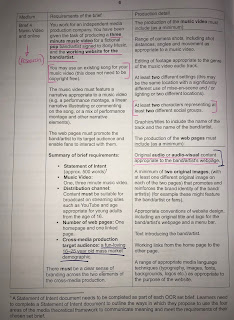
BRIEF NUMBER 4
For my media project I have chosen to make a music video for a ‘fictional pop artist’ as well as the ‘artists’ working website. As part o...
-
STATEMENT OF INTENT Brief: Music video and online website How do you intend to use the four areas of the media theor...
-
 According to the brief, my artist is to be fictionally signed to the famous record label Sony Music. Sony Music Entertainment , recognize...
 -
 HOZIER https://hozier.com/ Hozier is another suitable candidate to act as a case study in comparison to my own fictional artist 'Henr...